

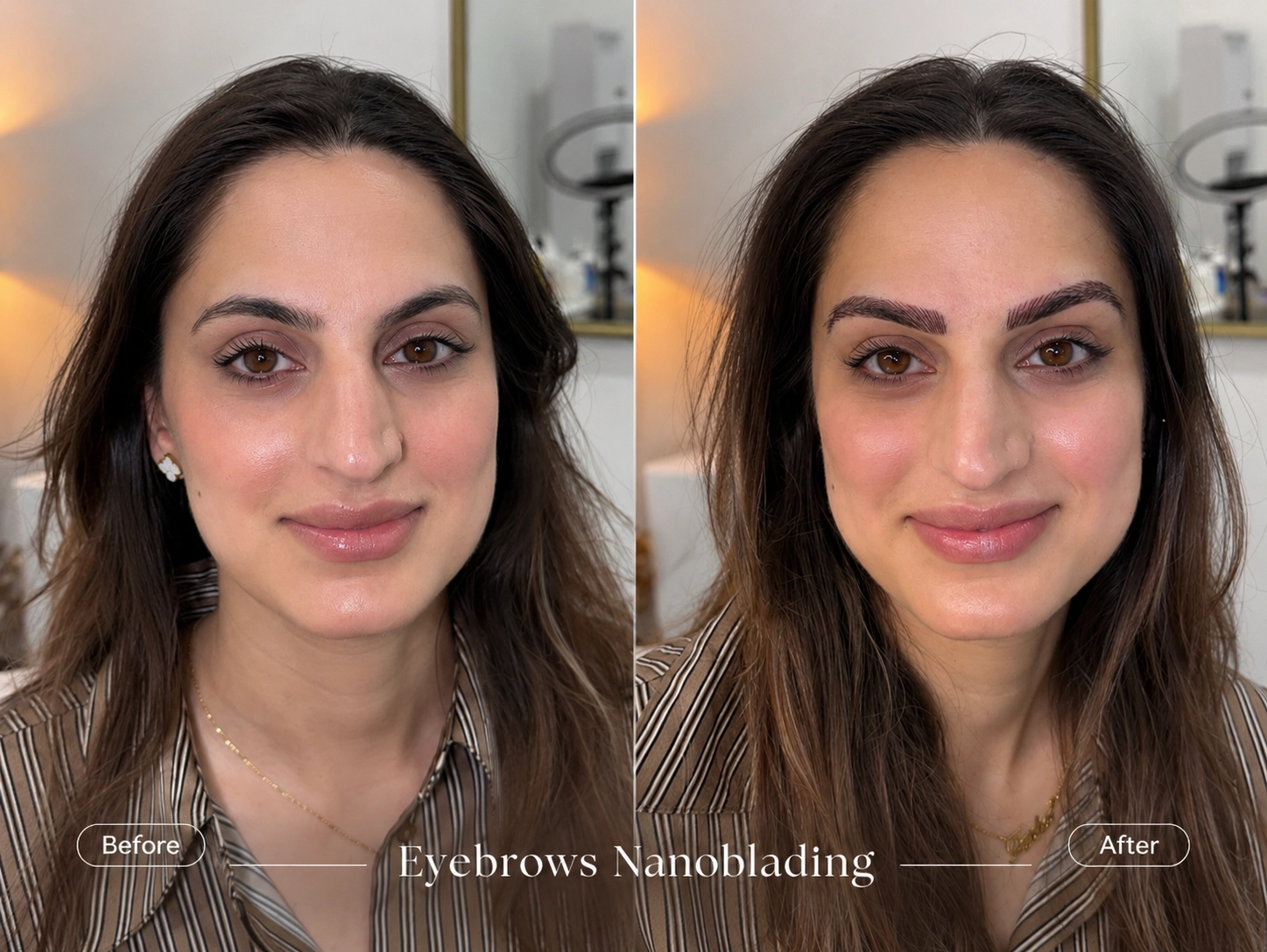
Nano Brows Before and After: What to Look for in Results
If you regularly pencil in a missing brow tail or fill the same gaps each morning, the appeal of nano brows is straightforward: more shape and definition when your face is bare. What is less obvious is how that result changes between leaving the appointment and seeing your brows after healing.
Nano brows before and after can look quite different, but the first “after” is only the beginning. Fresh colour may be stronger than you expected, some areas can look lighter during recovery, and the settled strokes may be softer than they were on the day. Your starting brows and the skin underneath them both influence the outcome.
What actually changes after nano brows?
Nano brows add fine, tattooed hair-like strokes using a digital machine. Depending on your starting point, the change may be subtle or more noticeable:
- Small gaps can look less obvious because added strokes sit among the existing hairs.
- A sparse tail can look more complete within an agreed brow design.
- Uneven-looking brows can gain a more balanced outline, without promising perfect symmetry.
- Thinning brows can look more defined without needing a solid, filled-in finish.
The treatment changes the appearance of the brow; it does not grow new hair, lift the skin or create the physical texture of real hairs. If you already have fairly full brows, a restrained design may be all you want. If you have very little hair, more of the visible result will come from pigment, so shape and spacing need particular attention.
At the consultation, it helps to say what you currently draw in. “I only fill the tail” and “I redraw both brows every morning” describe different goals, even if both people ask for natural-looking brows.
What will my brows look like straight after treatment?
Expect the new design to be easier to see than it was before. Fresh pigment can make the strokes and outline look stronger, especially if you are used to seeing very little brow hair without makeup.
Some redness, tenderness or mild swelling can occur after tattooing. These early changes make the day-of appearance an unreliable guide to the final colour. That does not mean every result that concerns you should simply be ignored: contact your artist if the shape or appearance worries you.
Before leaving, make sure you understand the care instructions and how to contact the studio. You should not have to work out your next steps from someone else’s healing photos.
How the appearance changes while nano brows heal
Healing is a progression rather than a schedule that looks identical on every face.
Early recovery: stronger colour and a more obvious outline
During the first few days, brows may look darker or more defined than the finish you had in mind. Give the colour time to settle instead of trying to lighten it with exfoliation or skincare products.
Flaking: a temporarily uneven appearance
As the surface recovers, light flaking or small scabs may develop. Different areas can shed at different times, which can make the brows look patchy. Do not pick at them or pull away flakes to make the two sides match.
A lighter-looking stage
Some people notice that their strokes become much harder to see after flaking. Artists sometimes call this “ghosting”. Colour can become more apparent as healing progresses, but it is not accurate to promise that every faint stroke will return. Any gaps that remain need to be assessed once the skin has settled.
Healed review: judging what has stayed
At the review, the useful questions are whether the skin has recovered, how much pigment has remained and whether small areas need refinement. This is different from judging freshly applied pigment or checking whether the surface has stopped peeling.
The stages can overlap, and some people have very little visible flaking. Less peeling does not automatically mean better retention, and more visible peeling does not tell you the final result on its own.
What should healed nano brows look like?
The aim is a settled hair-stroke effect that works with your natural brows. The colour commonly looks softer than immediately after treatment, and the strokes should be assessed as part of the whole brow rather than as individual marks under magnification.
A successful outcome does not have to be a dramatic transformation. It might mean a tail that is easier to see, fewer obvious gaps or less pencil needed for your preferred everyday look. Cosmetic tattooing may reduce your makeup routine, but it does not guarantee that you will never want brow makeup again.
If some strokes retain less pigment than others, a follow-up may be considered. It is also possible that the healed result already gives you enough definition. Adding more pigment should answer a specific need, rather than happen automatically because an appointment date has arrived.
How skin type can affect your result
The skin in the brow area matters more than a general label such as “oily face” or “dry skin”. Oil production, visible pores, texture and skin condition all need to be assessed.
Normal or dry skin
Healthy, fine-textured skin can be a good setting for defined hair strokes. However, “dry” should not be confused with irritated, cracked or actively flaking skin. A dry-skin label alone cannot promise crisp healed strokes or faster recovery.
Oily or combination skin
Nano brows may suit mildly oily or combination skin, but fine lines can soften more on oilier skin with larger pores. The healed result may have less distinct separation than the fresh work. More oil does not mean the treatment will fail; it means the artist needs to discuss whether the level of fine detail you want is realistic.
If your priority is fuller definition rather than separate strokes, a shaded approach may be worth considering. Our nano brows versus ombre brows guide explains the difference in finish.
Sensitive or currently irritated skin
Tell your artist about reactions, eczema or other skin problems around the brows. “Sensitive” does not predict one particular healed colour. The immediate question is whether the skin is suitable for treatment at all. An active problem may need assessment before cosmetic tattooing goes ahead.
What is different for mature skin?
Mature skin may be thinner, drier or less elastic, but two people of the same age can have very different skin. Carefully planned nano strokes may still be an option. The design and application need to respect the condition of the skin rather than follow an age-based template.
For thinning brows, the goal may be restoring a visible tail or giving the front more definition. There is no rule that older clients must have very pale brows: the shade should work with existing brow hair, skin undertone and the contrast you prefer.
Some mature clients need more recovery time before further work. Extra pigment should not be added while the skin is still recovering. Younger adults also need individual assessment; youth does not cancel out oily skin, irritation or a history of difficult healing.
Does oily or mature skin take longer to heal?
Pigment retention and healing speed are different things. A stroke that heals softly does not prove the skin took longer to recover. There is no well-established nano-brow timetable that assigns an exact number of days to oily, dry and combination skin.
Age-related changes can affect healing, but age is not the only factor. Health conditions, circulation, medications, skin irritation and how the area is cared for can also matter. Tell your artist about relevant medical history and ask your clinician if you have a condition that affects wound healing. Do not stop prescribed medication to prepare for an appointment without medical advice.
Allow several weeks for the result to settle, and follow the review timing agreed for your own brows. A calendar date does not establish that the skin is ready for another treatment.
What can you do to support healing?
Follow Lilac Beauty’s nanoblading aftercare instructions and the advice given at your appointment. Avoid picking or scratching, use aftercare cream only as directed, and observe the restrictions on makeup, active skincare, sweating and water exposure.
Do not add extra cream simply because your skin feels dry, or scrub the area because it feels oily. Ask the studio how to manage those concerns within your care plan.
Increasing redness, worsening pain, discharge, fever or skin that is not healing needs medical advice. Those signs should not be dismissed as ordinary colour changes.
See examples and discuss your own brows
For your own treatment, the starting point is a consultation with Laleh at our Rosebery studio. Bring a clear idea of what you would like to change, and mention existing brow tattoos, skin concerns and previous healing experiences.
You can view work from Lilac Beauty in our nano brows before-and-after gallery →
Visit our nano brows service page for more details →
current pricing and appointment enquiries.