

Brow Lamination for Thin or Sparse Brows: What to Expect?
If you fill in the same little gap every morning, photos of freshly laminated brows can be tempting. The shape looks wider, the hairs look tidier and the whole brow seems more noticeable. But how much of that change could you expect on your own brows?
Brow lamination can make some thin brows look fuller by changing how the existing hairs sit. It does not grow new hair or replace hair in bare areas. Whether it is worthwhile depends on the amount, length, direction and condition of the hair you already have.
Before booking, it helps to be specific about what “thin” means for your brows. Fine hairs and a nearly bare tail are different starting points.
Fine hairs, a narrow shape or sparse patches?
Look at your brows without pencil, powder or gel. Rather than deciding whether they are simply thick or thin, consider which of these descriptions fits best:
- Fine hairs: individual strands are delicate, but hair may still be present across most of the brow.
- A narrow outline: the brow looks slim overall, even though there may be quite a few hairs within that shape.
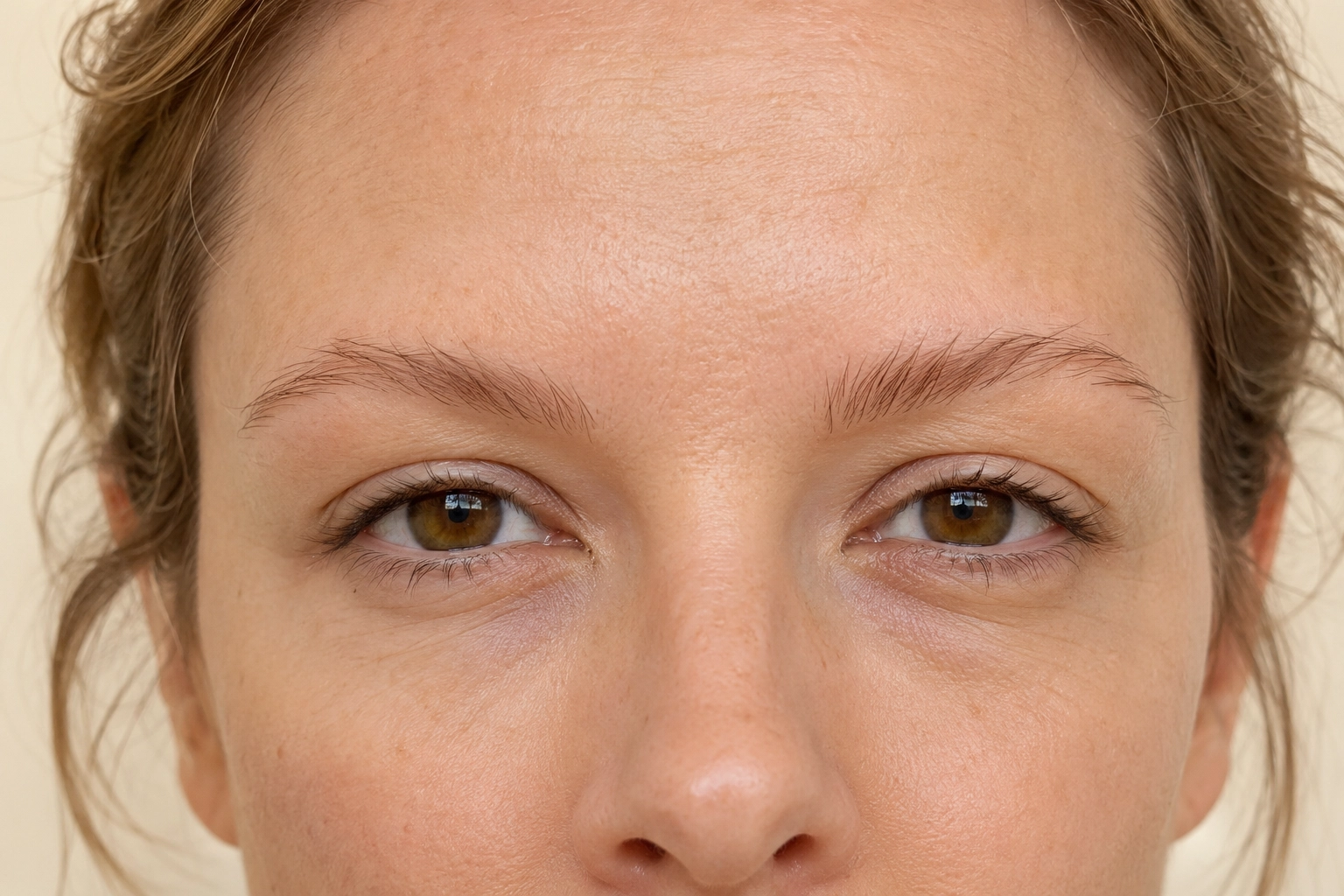
- Sparse areas: hairs are widely spaced, or sections such as the tail have very little hair.
- Pale hairs: some strands are difficult to see against the skin, so the brow looks less defined than its hair coverage suggests.
You may have more than one of these features. Point out the area you usually fill in and explain what you would like to see there afterwards. That makes it easier to discuss whether the main issue is hair placement, colour or a lack of coverage.
What can brow lamination change?
Lamination uses chemical solutions to reshape the existing brow hairs so they can be styled more easily. Hairs that lie downwards or overlap may contribute more to the visible outline when arranged differently. The brow can look broader or more orderly without any increase in the number of hairs.
The result does not have to be a sharply brushed-up look. At your consultation, explain whether you prefer a soft sweep, a tidier everyday shape or a more textured finish. A reference photo is useful for showing your taste, but your own hair coverage determines what can be achieved.
For example, “I want the front to look less flat, but I don’t want a tall, fluffy brow” is a clearer brief than “I want thicker brows.” It tells your stylist which change matters to you.
Where are the limits on very sparse brows?
Existing hair has to do the work. If there are only a few short strands around a gap, repositioning them may make little difference to that area. A tail with almost no hair will not become a complete tail through lamination alone.
This is why a fuller-looking outline and filled-in skin are not the same result. You might like the new direction of the hairs while still wanting a small amount of brow makeup in a gap.
Ask the stylist to explain which areas are likely to change and which will remain sparse. If the part you most want to improve is unlikely to look different, it is reasonable to choose another option or leave treatment for now.
Would adding brow tint make a difference?
Brow lamination and tint address different things. Lamination changes how the hair can be arranged; tint changes its colour. Darkening pale hairs can make them easier to see, which may add definition to the overall shape.
Tint still needs to be discussed realistically. It does not create hair in a bare patch, and any skin staining depends on the colouring product used. Do not assume every tint gives the same filled-in effect, or that the colour and lamination will last for exactly the same period.
If you like a subtle result, say so before colouring begins. Ask what shade is proposed and whether the look you admired in a photograph came from lamination alone, tint, makeup or a combination. Lilac Beauty’s lamination service includes the option to discuss tinting.
How to judge before-and-after photos
Start with the “before” image. A person with long, overlapping hairs has a different starting point from someone with a few short hairs and a missing tail. A dramatic change on the first person does not predict the second person’s result.
When looking at brow lamination before-and-after photos, ask:
- Was tint or another colouring service used?
- Is pencil, powder or concealer part of the finished look?
- Are the lighting, angle and distance similar in both images?
- Does the person have a similar amount of natural brow hair to me?
- Is this the freshly styled result, or a photo taken later?
These questions help you understand what changed. You can still use a photo as inspiration without expecting an identical brow shape or density.
What should you expect after the appointment?
Laminated brows still need day-to-day care. The hairs are not permanently glued into the finished salon style; gentle brushing may be needed to arrange them again. Ask your stylist to show you how to create the softer or more lifted look you have chosen.
Lilac Beauty describes results lasting up to eight weeks, but that is not a promise for every client. Discuss your expected maintenance and follow the aftercare advice for the products used, including when to get the brows wet, use makeup and apply any recommended conditioner.
Do not arrange another chemical treatment simply because the freshly styled appearance has changed. The condition of the hair and the product guidance should help determine when another appointment is appropriate.
When should lamination wait?
Naturally fine hair is not automatically damaged hair. However, brows that are brittle, breaking or already affected by previous chemical treatments need assessment before further processing. Over-processing can damage the hair, so a stronger treatment is not a shortcut to a fuller result.
Before booking, mention recent lamination, brow colouring, skin treatments and any previous reactions to dyes or beauty products. Ask whether a patch test is needed for the planned products. If the brow area is irritated, broken or affected by an active skin condition, discuss this first rather than treating over it.
What if lamination cannot give you the coverage you want?
If your main concern is pale hair, a conversation about tint alone may be more useful. If you want to fill a small gap occasionally, makeup gives you control over the shape without committing to a treatment.
For a longer-lasting change to the appearance of sparse areas, Nano Brows may be an option to discuss. This is cosmetic tattooing: pigment creates the appearance of hair strokes in the skin. It does not grow hair, and it requires its own suitability assessment, healing and maintenance.
There is no need to move straight from an unsuitable lamination treatment to a tattoo. The right choice depends on the result you want and the commitment you are comfortable with.
Before you book in Rosebery, Sydney
Bring your everyday brow routine into the conversation. Show which area you fill in, describe how much styling you are happy to do and ask whether the proposed treatment addresses that specific concern.
At Lilac Beauty, the lamination consultation considers your brow shape, hair texture and preferred finish. For current pricing and booking information, visit our eyebrow lamination service page. If your brows are very sparse or you are unsure whether to add tint, contact the studio before choosing your appointment.